Category Archives: new technology

My Dad is a microwave blender

The only real reason that robots haven’t replaced us yet is simply that robotic engineers can’t program all the knowledge currently required into a robot quick enough. As humans we adapt and learn every second of every day, therefore the sheer magnitude of possibilities a human brain provides excels any manufactured equivalent to date.

What we have seen though is that once configured, current robots in use are quicker, more efficient and less prone to accident. Amazon already have factories with considerably less error where robots are deployed, some Governments are looking to introduce drone delivery systems and Google have tested their automated car in Nevada for over a year and the only accidents recorded happened when a human overrode the system.

And to top that, at the end of last year there was a break through in how robots acquire their knowledge; they can adapt and learn through validated paths that process the human language by understanding how to identify speech patterns, therefore replicating how the brain connects from the frontal cortex to the striatum.

With these developments engineers predict artificial intelligence and robots will replace humans in the next 10 years, and by 2050 robots will be a part of our every day life. Gets you thinking doesn’t it?

To end on a lighter note though, I’d like to share a poem I love by one of my favorite non-robots, Tim Burton:

“Mr. Smith yelled at the doctor,
What have you done to my boy?
He’s not flesh and blood,
he’s aluminum alloy!”
The doctor said gently,
What I’m going to say
will sound pretty wild.
But you’re not the father
of this strange looking child.
You see, there still is some question
about the child’s gender,
but we think that its father
is a microwave blender.”

Tim BurtonThe Melancholy Death of Oyster Boy and Other Stories

Tagged , , , ,

The return of the geek…

It’s been brought to my attention a few times this year that I haven’t posted to this lovely little space for quite some time now, I had no idea I was letting my fellow geeks down so I’m making a commitment to be back in 2014 doing what I love most, distilling down the innovative technologies I’m so lucky to explore into terms, us mere (non coding) mortals can understand so we can all spread the excitement!

To get started again I’ve put a little review of my top favourite things I got to play with in 2013, and over the coming weeks I’ll be looking into the techy trends I predict will explode in 2014 too, plus some other cool stuff…


Number 4: Google Glass
After months upon months of beta testing, these sleek little glasses are starting to resemble something that could actually be useful in every day multi tasking, they still have a way to go before what they can do matches the price tag but, across 2013 Google have evolved the rudimentary to something tangible that takes your smartphone to your head in a fairly comfortable lightweight way…

It still strains my eyes a little though…

google glass

Google Glass

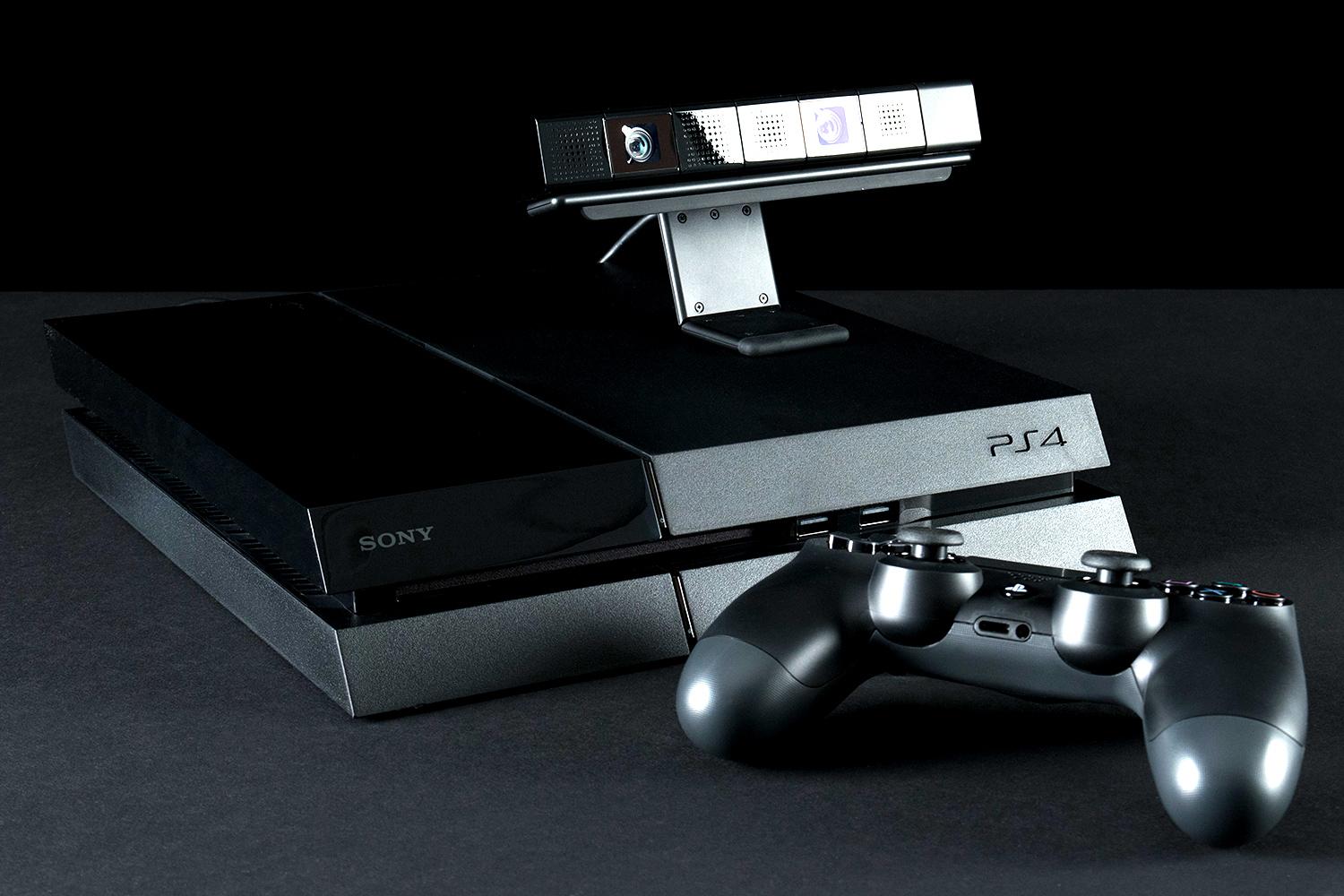
Number 3: My PS4
I recently donated my Xbox 360 to my 10-year-old cousin, whom I haven’t seen since as he’s now mastering his new found love of gaming.

It was a tough call, but this time round I’ve gone with Sony, why you ask? Simply put; the graphics have more horses behind them than ever before, the interface is brilliantly simple and intuitive and my thumbs don’t hurt as much due to the sleek controller. Oh, and it’s much quieter… shhh

Sony PS4

The full PS4 kit

Number 2: Bio stamps
You’ve all heard of the Nike Fuel band or the Pebble smart watch right? Take that and put into a silicon plaster laced with a circuit board one fifth the width of a human hair and you have Bio Stamps, taking the bulky nature of technology and matching it the soft contours of the human body; simply fascinating.

MC10 Bio stamp

Courtesy of MC10, a Bio stamp

You can explore more here; http://www.mc10inc.com/


Number 1: Oculus Rift
A clear winner for me; the guys I work with have been exploring the future of this amazing piece of tech for quite some time now and last year saw us launch a world first experience combining martial arts and car prototyping in a world that felt so real it caused some users motion sickness.
Launched on Kickstarter in 2012 to gain funding following a demo at E3, Oculus have raised millions since and a version should be available to consumers at the end of this year.

Oculus Rift

Oculus Rift

Words can’t do it justice so check out this video to get an idea of where it can take you…

Tagged , , , , , , ,

What is Windows Azure?

I’ve been picking the brains of some of our developers to really get to the bottom of what Windows Azure can provide; it’s interesting and really quite useful so I wanted to share my learning’s.

Firstly to understand what it is, it’s worth just remembering all the things you usually have to consider when developing a new service:  the OS you need to use, the network and how that will interact with the system, storage needs – scale, geography and so on…

Quite a lot really… so wouldn’t it be nice if you didn’t have to get through all that before you start bottoming out your idea? Well that’s what Windows Azure take care of – all those things you need to consider so you can concentrate on making your service great.

Azure is Microsoft’s cloud computing platform. It’s designed to be a place where you can run your service, at scale, on the internet.

Furthermore it takes a service centric view of cloud computing so it manages the entire cycle from design to deployment to ongoing monitoring and deployment of optimal versions of your service.

It consists of three layers:

  1. The Fabric layer, an abstract set of computer resources in the data centre consisting of multiple computers, running virtual machines, running windows.
  2. The Storage service, which is there to help manage the data coming in from your service in a reliable and scalable way.
  3. And the Developer experience.  This packages up the Fabric and Storage layers with all the API’s integrated in visual studio and delivered through an SDK (Software Development Kit).This can then be downloaded for free so you can develop and test the service locally before you deploy to the cloud.

So not only does this remove the stress of the pre-mapping stage, make the development a whole lot easier but you can also manage confidential information in a private cloud whilst rich content can be run in the public cloud AND it also works on a scalable model.

Obviously when you launch a new service you hope the uptake will continue to grow and you’ll reach a peek at some point in the scale of the growth. With a lot of buying models now you need to estimate that peak and pay upfront. Windows Azure runs on a ‘Pay as you go’ model.

If you want to learn more about the using Azure then you can visit www.dev.windowsazure.com

We heart cloud computing…

Tagged , , , , , ,

Spending money is now even more fun!

All you need is an iPhone, the iOS credit card reader and your finger.

The idea behind making the transactions mobile and easy is to open up the payment system for small businesses. This means they will be able take a payment anywhere without the stinging cost traditional card readers incur at the moment. As business owners you won’t need to set up a merchant account and pay any annual fee, this process is clear and transparent.

To the user it’s also quick and easy as the lengthy process of dialling through a land line is redundant too.

If this catches on, queues and impatience will be a thing of the past so I for one, am on board from both sides of the fence.

Tagged , ,

Google TV – better than Apple?

With the recent announcement of Google TV, closely followed by Sony announcing their new series of HDTV sets with Google TV built-in, the buzz around the agency is not surprisingly, all about internet TV.

This isn’t the first time a TV-connected computer has been attempted; Microsoft’s Xbox and Sony’s PlayStation both dominate this front room experience (albeit more reputedly in the gaming world). There are more attempts in the archives that never made it to mainstream too but most notably was the recent Apple TV (basically a simple media streamer with access to on-demand television and movie rentals) and superseding all of that of course was the Microsoft Media Center.

So what does everyone think of Google’s attempt? There seem to be a few opinions:

On one side of the fence are the group that feel Google TV really isn’t much more elaborate than plugging your computer into a TV, which they deem neither  ‘clever nor desirable’.

“I can’t think of anything more boring or anti-social than having to watch somebody else browse the web. And if you need to use a keyboard to find content then I think you’ve failed.”

Anon: Technical Architect

Fair enough I suppose this concept doesn’t particularly take me by storm either.

On the other side are those that feel Google TV will outshine Apple because of their attitude towards what they deliver…

“It will all be about the content offered to viewers. Whichever service/device provides the best content will win out and since Apple probably won’t put porn on their offering my money is on Google.”

Anon: (Another) Technical Architect

By using that quote I’m possibly opening this post up to a digression however, a valid point; Content is still King.

Generally overall I think there is a resistance (as always) to the latest technology trend, people want a cinematic HD widescreen experience at home and don’t necessarily relate that to surfing the web. In this generation though I think that’s naive, you only have to look at the number of people who have their laptop out or are tweeting from their phone and so on, all whilst watching the box…

I’m sitting on the fence (for now), it could make multi-tasking simpler but then, it could reduce my in-home cinematic experience. I like the idea of being able to combine the web and TV experience, but only if I’ve got control of the remote… I’d be most annoyed if the other half decided to load The Gadget Show halfway through my Monday date with my TV boyfriend from Spooks!

Tagged , , , ,

Is the web dead? I didn’t know it was poorly!

I was reading Wired the other day and about two-thirds of the way through (page 125 to be exact) Chris Anderson, Editor in Chief, announced that the web is dead! Once I’d got over feeling bad about not realising the web was feeling under the weather in the first place, I had a dig around to see what everyone else thought, turns out it’s sparked quite a debate.

Anderson states thatWithin five years… the number of users accessing the Net from mobile devices will surpass the number who access it from PCs.’ Perhaps not impossible but a bold statement I feel.

Whilst I agree that one of the most noticeable shifts in the world of pixels has been the move from the ‘open web’ to platforms that only use the internet for transport, but not the browser for display, it’s worth remembering that these trends tend to happen in phases.

Remember how ‘the browser’ took over everything, then developers demanded more options therefore moved to apps… but the browser will again overcome the apps distinguishing features and the technicalities they present and so the browser will keep coming back to provide the support. What most internet surfers don’t grasp is that it is in fact made up of several separate components of which the World Wide Web is just one application.

So is it really all moving to a post-HTML environment?

(I won’t mention the irony of how Wired actually published this on the website before I received my subscription… oops!)

Tagged , , , ,

When robots rule the world…

Not long after inventing the wheel man has had an increasing fascination for passing on our menial laborious tasks to anyone or thing other than ourselves. Once slavery was abolished through society in the early millennia attentions were turned to develop mechanical solutions instead. Man tried to play God.

To some degree man succeeded. By creating complex mechanisms and systems capable of performing repetitive arduous tasks; from the first water pumps, the first locomotive and in today’s vast technologically glorious world just about everything.

The last year has seen robots being engineered that can help teach children who have suffered from brain damage to walk again, the KASPAR Robot W/RoboSkin teaches autistic kids interaction, we’ve seen prototypes teach children in schools (in fact this blog caught my eye; Will teachers be replaced by computers?) and at Cambridge University they have developed a machine that can analyse millions of papers in an infinitely shorter period of time than any human can ever expect to achieve.

But where will it stop? Developing technology to aid us in our daily work seems a fantastic idea, but how long before we are entirely replaced by a robotic army?

Somewhere in the US robots have been created to be self-sufficient. Powered by microbial fuel cells, they are programmed with a survival instinct which pre-programs them to prey on all sorts of creepy crawlies and small rodents which they then digest to provide themselves with power.

A group of robotics researchers across Europe are working on a project to ascertain whether humanoid bots are able to interact with groups of people in a realistic, anthropomorphic way. They’ve built algorithms that will enable the bots to mimic human actions and emotions. Think about that for a second; if that works we are talking about human looking robots that have adept social skills. Can you imagine them in a room deciphering a conversation from all the background noise and music?

And if that wasn’t enough the future science historians themselves have marked the beginning of the 21st century for the era when robots will take their place beside human scientists.

It’s all quite mind-boggling when you think about it. I remember watching ‘I Robot’ when it came out (admittedly mainly for the Mr Smith eye candy) but realistically, a human and humanoid mixed world could be just around the corner…

Tagged , ,

Google Social Search

One of the latest developments I’ve been exploring is Google’s Social Search feature designed to aid quick searches from within your online social circle.

The theory behind Social Search is that your online connections will likely be talking about topics more relevant to you because you’re connected with them due to shared work life or interests.

So how does it work?

Well if you’re logged in to Google, as you search for something you should see an additional search result pop up at the bottom of your results page “Results from people in your social circle.” The results will consist of things like blogs from your friends and colleagues, their website feeds, tweets and status updates.

Who’s in your circle?

At the moment Google Social Search is just that, a social search within all linked Google assets e.g. Gmail, Google chat, people in your contacts list or following you on buzz and so on. It’s not known at this stage whether it will branch out to the likes of Facebook but in theory this is great if you want to see what your friends are saying about a film you want to see or a new restaurant you want to check out.

I’d much rather take their word for it, wouldn’t you?

Tagged , , , ,

Achieving digital balance

The online world evolves at such a breakneck speed it’s easy to get sidetracked by the latest shiny gadget or cutting edge technology.

Once we lived in a world where clients would phone up and say ‘We want a website’, now more often than not the call I take is ‘I saw this and I want one for our businesses’.

The key is to strive for digital balance. Remember the business requirement but add in enough innovation and excitement to keep your client and the audience enticed. By delivering a balanced media plan you will achieve a greater ROI by allocating accountability and measurement to each media chosen. By being media and technology neutral your results will be integrated and effective.

I’m not saying that you should ignore new technologies and only rely on the tried and tested, absolutely not, but don’t just adopt technology for technology’s sake.

Start with your staple ingredients of a tried and tested planning model, add in a dash of innovation, a spoonful of pioneering technology, a splash of something daring then check it against your ROI model.

If it all adds up you’re on way to achieving your digital balance.

Tagged , , ,

Blue lego bricks

Ironic that I’m typing this on my iPhone but numbered are the days that I shall do so. I’m getting pretty fed up with the battle between Apple and Adobe. Anyone else out there have a view on this?

Adobe took a big step towards reconciliation recently and announced their ‘Packager for iPhone’ tool. The Packager is a key aspect of Adobe’s CS5 update to its flagship creative suite, due for release to the market just days after Apple’s damning words iterated by the ‘legendary’ Steve Jobs.

At a recent Apple meeting he announced an amendment to their app development terms and conditions effectively banning the use of Flash.

So I’m looking into the HTC Evo 4G, it looks pretty good. Perhaps we can turn all the abandoned iPhones into a work of art, each one can resemble a blue Lego brick, we can call it ‘In the absence of flash’…

Tagged , , , , , , ,