Author Archives: ScarletGeek

the voice inside my head told me to do it

Psssst

I’ve been trying to work out how to deliver whispers through experiences.

No I haven’t finally lost the plot, though you’re forgiven for thinking so but it has got me thinking about what we need to bring together to do this.

Binaural sound is trending at the moment, though largely delivered through bigger immersive experiences or using 360 video and normal headphones, which is ace and puts you in the moment more than one directional sound can.

But it’s not enough for me. I want to take this one step further and completely blur the lines between visual and sound effects so that they’re delivered together seamlessly…

Imagine a VR headset with built in bone conduction audio that would give you complete visual and audio 360… still with me? Good.

This really would take you to the next level of immersion and rumor has it something is being trialled, which I am very excited about…

Immersive storytelling is about to get a whole lot more… well immersive.


vogtk

found on imgflip.com –  thank you 

Tagged , , ,

179

This week I was privileged enough to be counted amongst 12 other fantastic women as leaders of tomorrow in the IPA Women of Tomorrow awards

In the run up to this event and many others on March 8th, I’ve been asked a lot about how I feel about being a leading woman, and more recently a leading woman ‘in tech’ and I wanted to share my thoughts with anyone else who may be interested.

First and foremost I am both proud and humbled, it is exciting to be recognised as one of the women to watch ‘bursting full of brains, vision, inspiration and energy with a wealth of experience, results and high recommendations under their belts.’ Thank you Nicky Bullard, one of my judges and another amazing woman.

Whilst I am a feminist (it would be silly to not be on my own side having been a woman for a while now) I have to thank my other judge Dan Shute (who is a man) for calling out that one of the reasons I won was not because I’m shouting about my gender but because I’m cracking on with simply being the best person I can be, which is all I’ve ever done. 

I love being a woman, but that doesn’t mean I’m ‘anti man’. I also love being a leader, inspiring others to become leaders, working with clever people and working with techy stuff, because I love all these things I am good at it.

I encourage everyone to find something they love doing. It doesn’t matter if you’re male, female, black, white, young, old, privileged or not. I live my life on the mantra of ‘If you can dream it, you can achieve it.’ Thanks Walt. I’m not saying we all get our fairytale ending if we skip through life singing, but live by this and a ton of hard work and very little can hold you back. 

I’m as much an advocate for equality as I am for not using circumstance as an excuse, together we will always achieve more. 

That said, sadly there are a dying breed of luddites out there still doubting equality, to them I’d like to point out that 179 is the sum of my bra size and my IQ, I’ll let you do the math.
  

Tagged

getting native ads right

There are so many ways websites can generate revenue through ads, personally, like many people I find 99% of them irritating, but as an advertiser I also know the importance they have for businesses selling and buying the spaces. 

With the rise of ad-blockers the focus on making creative work harder and better has never been more prevalent and one of the biggest digital marketing trends continuing this year are custom-made native ads, designed to appear as part of a website’s standard content.

Beyond just the aesthetics, native ads are also created to integrate seamlessly into the functionality of the site, which means they impact the customer journey, particularly if the buyer is taking over a lot of space. This can have a negative effect especially if the branding isn’t clear, which is often the case as they normally contain content relevant to the site rather than an explicit ad message. 

Native ads aren’t necessarily immune to ad blockers, the execution of them varies greatly but fundamentally they are not published as the site’s editorial so the tech is still ad serving. You only have to block ads on Forbes to see this happening, and those native ads are created for Forbes.

So how do you create a good native ad?

First and foremost, think about the behavior you’re targeting on the site through the content you choose rather than the demographic. For example, if it’s an automotive site, create refreshing content relevant to the cars or consideration process of buying a car, not the ‘ABC1’ you might be hoping will see it and be distracted by your set of golf clubs because you’ve assumed as a demographic that’s what he wants to see instead.

Secondly, don’t be deceptive in the customer journey. Native ads are generally accepted more than traditional ads because they are more trusted, this is because of the relevancy not just at first view level but of the journey in totality. Don’t abuse this, keep your click destination as relevant as the core content. 

Finally, keep it considered and polished. Native ads aren’t a home for any old crap, brand metrics show that they are considered to be more premium from discovery through to purchase. Stay true to the above  points and you will see a greater halo effect on your brand without having to be shouty about your brand presence. 

Simple really; know what your audience want to see, make it worth them seeing and follow that thought through to purchase. 

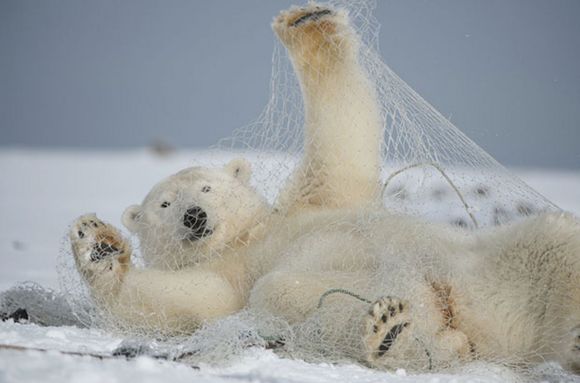
Stick to these principles and avoid the display pondweed caught in the ad blocker net.

Don’t be this guy…Polar-Bear-in-Fishing-Net-MAIN

image found on the daily mail. thank you

Tagged , , ,

music is morphing

The audioscape is shifting. In 2014 digital music revenue matched the physical and though the report isn’t out yet I suspect the balance tipped over towards digital in 2015. Whilst downloads still just about make up the bulk of that revenue, streaming services show continued growth to satisfy the personalised on-demand needs of the ever impatient consumer.

It is becoming more apparent however, that rather than posing a threat to traditional radio broadcast, it is in fact providing pre-cognitive insight to help programmers find the next hit, or know when to stop playing a track to death, thankfully.

Having long been an advocate of services such as Spotify, Amazon Prime and YouTube I’ve pondered several times where the data connections between airplay, streaming and record sales will join up.

A short while back I spoke with Spotify (the world’s biggest music streaming service) about how their platform can inform what’s next, allowing them to be ahead of the curve on everything from up and coming artists to how to name their playlists, the value is clear; it’s a completely accurate analysis of listener choice.

Streaming is a mainstream activity. Over two thirds of internet users accessed a licensed digital service in 2015 and the strength of the industry today is seen in the total flexibility it provides, allowing artists to reach a much wider audience in a way they want to be reached.

This has seen a shift from music models based on ownership to those based on access, which coupled with consumers streaming more and more on smartphone and tablets (up 114% in 2015 according to Wells Fargo) means subscriptions will continue to shape the music portfolio available.

So what’s next? I reckon we have three things to look forward to:

First up, music will become more intuitive. The Echo Nest acquired by Spotify provides an intelligence platform that mixes human skill, clever algorithms and social curation, meaning you can quickly get personal. This thinking will spread.

Secondly, enhancing how we perform by influencing the frequency of our brainwaves will continue to improve. We all know that faster music makes us run faster and slower music focusses breathing for yoga. This thinking is already built into how Spotify’s algorithm can work, for example their partnership with Nike which matches music to your tempo.

Thirdly, a merger of these two approaches to create a constant seamless service that will use prediction to enhance our brainwaves through binaural beats so we all become super intelligent thanks to music.

OK, maybe that last one is a few years away… but it will happen.


-3952

Tagged , , , , , ,

YOLO to FOMO

How many times have you rolled your eyes and resignedly sighed ‘Oh the Yoof of today’?

If I’m honest, I lost count a while back, but that said I’ve also forgotten the last time I said it. Why? Because quite frankly this ‘Yoof’ are outsmarting c-suites around the world and as they start to enter the workplace they’re shaking things up, I believe for the better.

They’re more focused, more ambitious and more tech enabled than any other generation to date. They also have the lowest drug abuse, lowest alcohol abuse and lowest teenage pregnancy rate than any other generation. They’re tech savvy and life savvy.

They are the first digitally native generation, having never known a world without the internet and according to Business Insider 61% would rather be an entrepreneur than an employee when they graduate.

They’re the generation happy to pay over the odds for the latest smartphone but that make up for it by streaming video content for free rather than paying to rent movies, they dual screen constantly, multi task ferociously, are hungry for everything, patient for nothing.

For brands, they pose an increasingly difficult audience to reach, with such rapid and sporadic consumption of media they live in fear that they will miss out. They constantly switch between devices and channels, which has resulted in them having the attention span of a goldfish… literally.

They’re exposed to thousands of brands, hundreds of times from their waking moment to their sleeping one, so the question posed to brands today is, how do you make your 8 seconds count?

Less is certainly more, and any communication must cut through the noise in a concise way, bear in mind that these guys have entire conversations through emojis, or Kimojis (JGI).

Forget disruptive technology, these guys are already beginning to change the landscape. The clunky old guys at the top currently trying to move things forwards will simply need to keep up or get ready to pack their suitcases and go home.


emoji unicorn


p.s. YOLO = You Only Live Once (totes popular with millennials) FOMO = Fear Of Missing Out (which if you read the post you’ll get 😉 )

p.p.s. sorry if you’re feeling old now

p.p.p.s. but I did use a unicorn emoji so that restores the balance

Tagged , , , ,

Click to Predict

Last year eCommerce saw a rise in click to collect behaviour, pop up millennial hubs, drone deliveries, shoppable store fronts and mobile payment systems like Apple Pay leapfrog forwards. So what does this year hold?

Here are three things I think will start to take off:

  1. sCommerce: 2015 saw all of the major social players roll out their version of the ‘buy now’ button in order to bring shopping to the masses acting on impulse in social media around the world. The trend is set to spike into this year as the tracking of associated likes and comments enable brands to quickly grasp and react to what consumers want.
  2. Pre-cognitive commerce: Is the art of knowing what consumers want before they know they want it. In a connected world where immediate gratification is an increasing expectation, brands will need to be reactive more quickly, not to what shoppers ask for, but to what they may ask for next. 
  3. Truth-based purchasing: Technology has provided a level of connectivity that means brands will not be able to hide anything about their products in the future. Clothes will communicate with washing machines as to how they need to be washed, food will talk to fridges about when they’re going out of date, the national grid will talk to homes about when they are switching to ‘bad’ energy. The margin for creative license in communicating brand truths has narrowed further and will continue to do so.

I wonder who will get it right…

Keep-Your-Heels-Head-and-Standards-High-Coco-Chanel-Poster-Textual-Art-A89P389P1824

Tagged , , , , ,

“Our business is infested with idiots who to try to impress by using pretentious jargon.”

So said David Ogilvy.

This post is born of a conversation with a colleague asking what I thought the buzzwords for 2016 might be. I didn’t have an answer on the spot as I hadn’t heard any on my first day back (traveling around Morocco for the festive period is a good way to escape jargon btw). 

Then I heard this word three times this week so I guess it’s on the list… (drumroll)… MARCHITECTURE. 

Wyyyaaaatt? I hear you say. The first time I heard this I rolled my eyes, slid down my seat and promptly left the room. The second time yielded a similar result, the third… well I guess I had to make sure I could try and nip it in the bud sooner rather than later. 

So, ‘Marchitecture’. It’s apparently what happens when a marketing department and a technical department get together. In the decade or so I’ve been making techy, digi stuff for marketing this has just been ‘integration’ but hey, apparently we need a martech strat and a martech stack now.

Don’t get me wrong, marketing and technology should absolutely weave together and it’s not easy to compile an ecosystem that combines content and functionality with a robust framework in place. But why must we coin it so? It really doesn’t help the rep that we marketeers have to keep coming up with these terms.

My mild rant is affirmed by the hissy fit that autocorrect threw at me throughout the writing of this post. 

J-Jargon-cartoon2

Tagged ,

Is it a bird? erm nope.

The next era of connectivity is on the horizon, or rather more accurately hovering above it, as tech giants launch their test projects to provide internet coverage for the harder to reach parts of the world.

Google have test piloted Project Loon a few times since June 2013 near places such as New Zealand’s South Island and Sri Lanka, a series of high- altitude balloons equipped with LTE (more commonly known as 4G LTE) that rides the wind currents in the stratosphere.

Facebook have also developed a fleet of solar-powered drones called Aquila now ready to hover at altitudes of 60,000 to 90,000 feet. These can be steered and controlled more directly, constantly circling a two mile radius to stay aloft.

Both the balloons and the drones can be air born for around three months.

Combined with lower priced smartphones coming to market we are seeing the next evolution of connectivity looking set to be pretty rapid.

There’s still a way to go to stabilise the launch and flight of both, plus the clean up exercise once they come back down but the effort to connect the whole world with the internet is accelerating.

Next we’ll be in orbit, talking to the moon, connecting galaxies… well, maybe.


clangers

Tagged , , , , , ,

Curiosity didn’t kill the cat, complacency did

A big part of Leadership is the ability to pivot and adapt to change. Within the creative industry change happens all around us, new ideas, emerging technologies, new skill sets, different teams, in my entire career I don’t think I’ve had two days that went the same way.

I currently help lead the digital discipline across an integrated agency that has moved rapidly from its roots in traditional advertising, to adapt to our clients needs to deliver quality integrated campaigns.

With this evolution we are seeing a new expertise blossoming in the coined value of ‘T-shaped’ people, those that have a strong vertical but can work alongside other teams and departments to see the wider context of their work. For example, my vertical is digital, but I work through ‘the line’ with traditional creative and production teams. Within the digital vertical I am working with other ‘T’s’; designers who work with tech, producers who work with writers and so on.

The success of our agency is inevitably about the ability to embrace change, being curious about what everyone around them is doing and collaborating to make it amazing.

We’re a digitally empowered nation. As an agency our clients and their audiences are smart. They can tell when the dots aren’t joined up so a blended skill set is no longer a nice to have, it’s a necessity to transformation.

The search for the best talent today is less about specialism and more about diversity. This next phase promises to be dynamic, turbulent and challenging.

The last of the dinosaurs are on their way out.

all my friends


Tagged ,

Personalisation with a side of ease

As someone who travels a lot there’s nothing worse than stepping off a long flight, red-eye kicking in, knowing you’ve still got to claim your luggage, find your transfer, get across town, find your hotel, complete an arduous check in process and get up to your room before you can finally collapse on the bed.

So imagine my excitement when I spent a day with the top tech bods in the travel and hospitality industry reinventing the entire future-scape for the upgrade needed to cater for Gen X & Y travellers.

We talked a lot about the automation of the journey. How we could put in place a centralised data approach with intelligence systems connected to smartphones and robots aiding the various staff throughout. Whilst I find that really exciting, I’m sure you won’t want to be bored with the tech stack, so to let you in on how it might feel in 2025 I’ll summarise a brief walk through of a typical business trip, we’ll start with stepping off that plane again…

The second you switch from flight mode a signal is sent to your smart suitcase where the built-in tracker connects to your phone as you make your way through customs, you time getting to the conveyor belt perfectly. You pick up your case and activate the next signal, which is sent to your driver who now knows to get to the pick up bay within a three-minute window, avoiding parking fees, congestion and more importantly you being irritated by him not being there.

Your GPS switches to your driver who you find with equal ease. You collapse in the back of the car, whatever music you want is synced automatically, the temperature adjusted and an update sent to your hotel with your live eta feed updating your awaiting concierge.

On arrival your check-in is confirmed through facial recognition, you’re then greeted personally and swiftly shown to your room whereupon your climate is again synced, your drink and snack of choice is freshly prepared and your smart TV pre-loaded with your favourite channels. You can even activate a holographic in-room personal trainer should you so wish…

Your dinner table is reserved at the time you would normally eat and on arrival you see that the menu is based on your culinary preferences with wine recommendations to match. Not only that but the seasonal info and the history of the restaurant Chef are sent to your mobile because they know you like to read the background to what you eat and how it’s prepared.

After dinner, you retire to the lounge and login to a guest screen which is loaded with your business itinerary, options to tailor your travel and where to take your clients, plus recommendations on what to do with your spare time.

You relax, confident that every detail has been taken care of.

In this future-scape our aim is to democratise an executive level of assistance so that everyone can have his or her own ‘Parker’ rather than having to rely on ‘Manwell’.

do not disturb

Tagged , , ,